ProSource Wholesale
|
5/20/2026
Cohesion Without Repetition: How Designers Create Flow Throughout a Home

With more than 15 years of experience in residential remodeling, Abby Cunningham of Arose Interiors has seen firsthand how small design decisions can shape the feel of an entire home.
One question she hears time and time again:
Should bathroom and kitchen cabinets match?
The answer isn’t as simple as yes or no. Working in a remodel heavy market, where homeowners are updating existing spaces rather than starting from scratch, Abby brings a practical, real-world perspective to kitchen and bath design. Her work is rooted in thoughtful, personalized solutions that balance creativity, functionality, and long-term livability.
“I think matching and consistency go together, but not in a repetitive way,” Abby explains. “When we get a little too matchy, the spaces can start to feel a little dry and bland.”
Instead of repeating the same cabinetry throughout a home, Abby focuses on creating a layered, connected design that reflects how her clients live, balancing consistency, variation, and personal style.
And for Abby, having access to a trusted resource like ProSource of Pittsburgh plays a key role in helping clients visualize and execute those decisions with confidence.
Here’s how you can approach cabinet design across kitchens and bathrooms with clarity.
Should Bathroom and Kitchen Cabinets Match? Short answer: Not necessarily.
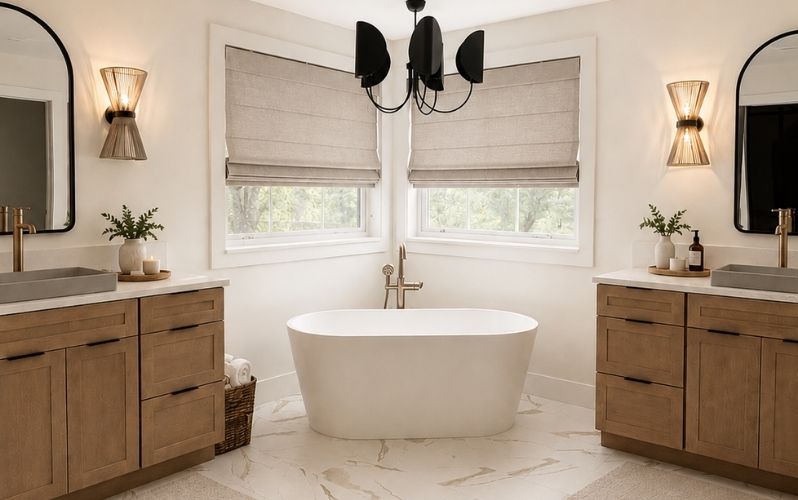
While matching cabinetry can work in certain situations, Abby typically recommends coordinating rather than duplicating. “Consistency creates flow,” she explains, “but that doesn’t mean everything needs to be exactly the same.” The goal is to create a home that feels connected, not repetitive.
Having access to a wide range of cabinet styles and finishes in one place — like in a ProSource showroom — often helps clients better understand the difference between matching and coordinating early in the design process.
Why Matching Isn’t the Same as Cohesion
One of the most common misconceptions homeowners have is equating matching with good design. In reality, too much repetition can have the opposite effect.
“The biggest mistake I see is using the exact same door style and finish everywhere,” Abby says. “It can start to feel builder-grade — like everything was just selected and repeated throughout the home without intention.”
Instead, strong design relies on intentional connections between spaces, not identical ones. Being able to compare door styles, finishes, or hardware details in a private showroom allows designers and clients to make more thoughtful, layered decisions that create cohesion without repetition.
When It Makes Sense to Match Cabinetry
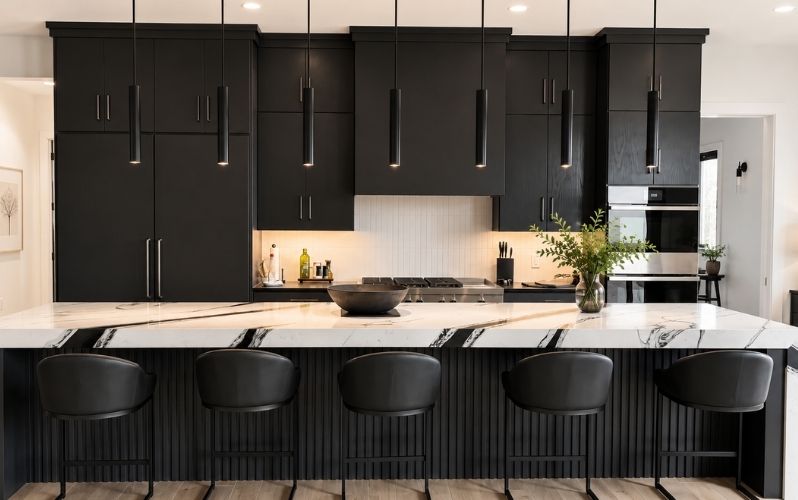
There are situations where matching cabinetry can be beneficial. “There’s a hierarchy within a home,” Abby explains. “Public spaces like kitchens, living areas, or built-ins benefit from consistency because they’re seen more often and used daily.” In these areas, repeating finishes or design elements can create a sense of continuity and visual calm.
For designers, having access to consistent product lines and coordinated materials through a centralized partner like ProSource can make it easier to carry those design elements across spaces without sacrificing quality or efficiency.
Where Designers Create Variation
While main living spaces often benefit from consistency, secondary spaces offer an opportunity for creativity. “In bathrooms, laundry rooms, or powder rooms, you can push the design a little more,” Abby says. “Those spaces are a great opportunity to introduce something different.”
This contrast adds depth to the overall design while still maintaining a cohesive feel throughout the home. Having one-stop-shop with a broad selection of cabinetry styles, finishes, and materials allows designers to confidently introduce variation while still maintaining a unified design language.
How to Create Cohesion Without Matching Everything
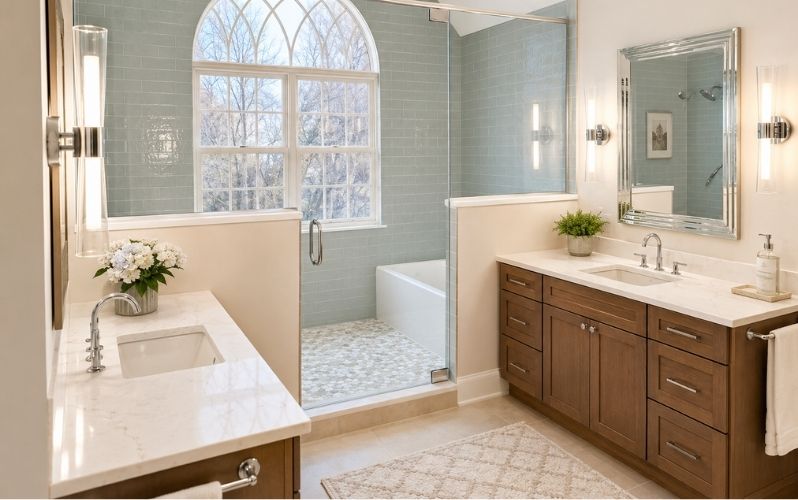
One of Abby’s go-to strategies is what she calls an 80/20 approach.
“I like to keep about 80% of the design cohesive and then allow 20% for variation,” she explains.
This might look like:
- Carrying a cabinet door style or wood tone into multiple spaces
- Maintaining a consistent color palette across rooms
- Repeating architectural elements like trim or millwork
- Varying finishes or accents to give each space its own personality
Working within a showroom environment helps bring this concept to life. Allowing clients to see how materials and finishes interact across different applications before final decisions are made. The result is a home design that feels intentional and layered, not overly uniform.
The Detail That Ties It All Together: Cabinet Hardware
When cabinetry differs between spaces, cabinet hardware becomes one of the most effective ways to create cohesion. “Hardware really is the jewelry of the design,” Abby says. “It’s one of the finishing touches, but it makes a big impact.”
By keeping hardware finishes or styles consistent across kitchens and bathrooms, designers can create a strong visual connection without matching cabinetry exactly.
Trending Hardware Finishes
According to Abby, popular options in the Pittsburgh area include:
Being able to see and feel hardware options in person helps ensure those finishing details align across spaces and elevate the overall design.
Budget Considerations: Where to Invest
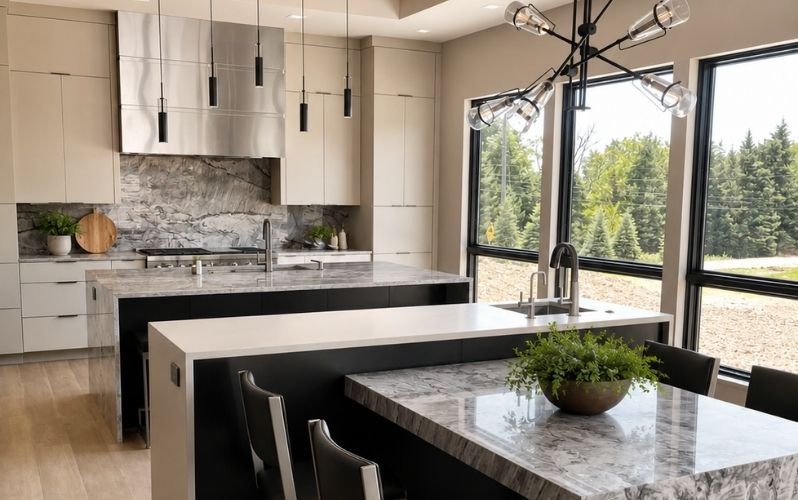
Budget often plays a role in cabinetry decisions, but Abby encourages clients to prioritize long-term value. “I always suggest investing in quality cabinetry first,” she explains. “That’s the part of the design that lasts.” Other elements like paint, hardware, or tile can be updated over time.
Even small variations, like changing a door style or finish in different spaces, can create visual interest without significantly increasing cost.
Access to a range of product options across price points also allows designers to guide clients toward solutions that balance budget with design intent.
Why ProSource Is a Strategic Partner for Designers
Creating cohesive kitchen and bathroom designs requires more than just good ideas, it requires the right resources. For Abby, working with ProSource has been a key part of her process for over a decade.
“It’s incredibly helpful to have everything in one place,” she says. “Cabinetry, flooring, and tile across different price points, it saves time and simplifies the process.”
Beyond product selection, ProSource provides:
“Clients are very visual,” Abby explains. “Being able to see finishes, compare options, and understand how everything works together makes a huge difference.”
Supporting Trade Professionals at Every Step
For designers managing multiple spaces within a home, having a trusted partner is critical. “As a solopreneur, I’m doing everything,” Abby says. “So having a resource like ProSource helps streamline the process.”
She also highlights the importance of strong relationships within the showroom. “My inside sales rep has been fantastic from helping with availability, pricing, to problem-solving behind the scenes. That kind of support really helps me serve my clients better.”
That level of support allows designers to stay focused on design while knowing the sourcing, logistics, and product coordination are handled efficiently.
Final Takeaway: Design for Cohesion, Not Perfection
the most successful designs focus on:
- Intentional cohesion
- Thoughtful variation
- Consistent design language
- Personalized spaces
“I always tell clients to design for themselves and not worry so much about resale,” Abby says. “Take some risks and make the space your own.
Because at the end of the day, great design isn’t about making everything match, it’s about making everything work together.
Get Started Today
Tagged:
Cabinet Hardware
Cabinets
Outdoor
Accessories
Vanities
Kitchen
Bathroom
Design
Home Remodeling and Commercial Renovation Made Easy
Whether you are updating a little, doing a full-scale remodel, you’ve come to the right place. Browse stunning spaces created with the help of ProSource Wholesale. Gain knowledge from articles with project tips and trends ideas. Browse over 50,000 products at low, wholesale prices. Then connect with your local showroom to get started.
Helping You Complete Successful Projects
With a team of product and project experts who provide personalized service tailored to your needs, ProSource is the source for project success. We're more than a home improvement store. Since 1991, we’ve been a trusted partner for trade professionals and their clients.
ProSource Helps Complete Successful Projects. Make Yours Next.
Find A Local Showroom