ProSource Wholesale
|
11/23/2026

Creating a warm and welcoming home for winter gatherings does not always require a full renovation. Thoughtful changes to color, lighting, flooring, and textiles can shift the feeling of a space while making it more comfortable and functional for everyday life.
With more than 40 years of experience in paint and decorating, Wendy Ochalek has built a career around helping clients make those decisions with confidence. Her expertise has grown from color consultations, wallpaper, and window treatments to flooring, lighting, décor, and kitchen and bath renovations.
In 2020, she launched Queen of Color, and her work has since earned the Community Choice Award for Interior Design four consecutive years.
Begin with Color, Then Build the Room Around It
When homeowners want to make a space feel warmer without starting a major renovation, Wendy recommends beginning with paint. Creamy whites, soft taupes, warm greiges, and other warm neutrals can soften a room without requiring a bold color. In a home dominated by cool grays and whites, smaller additions of brown, rust, gold, or natural wood tones can also create a more inviting atmosphere.
Paint, however, is only the starting point. The wall color should help guide the other materials used throughout the room.
Color of the Year announcements can provide inspiration, but they do not need to determine the entire design. A trending color may appear on the walls, but it can also be introduced through a rug, tile pattern, window treatment, cabinet finish, hardware selection, or artwork.
The client’s preferences, existing materials, natural light, and lifestyle should remain central to the decision.
Layer Lighting and Texture for a Warmer Atmosphere
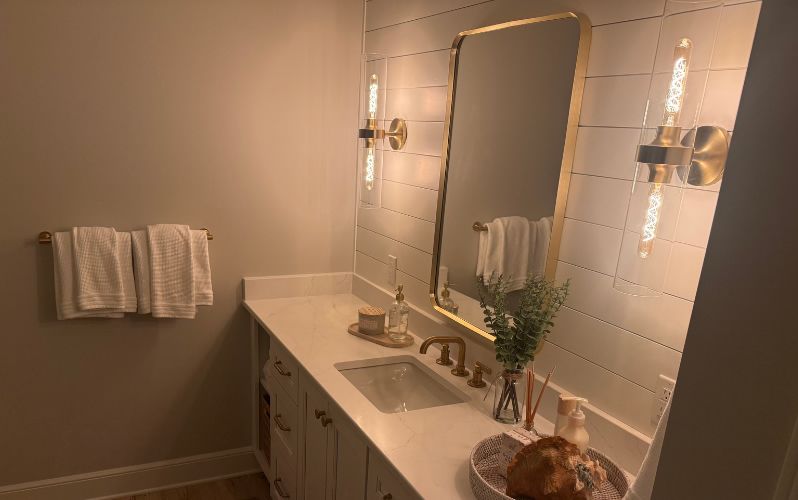
Paint establishes the palette, but lighting and texture help bring it to life.
Wendy favors layered lighting over relying solely on a bright overhead fixture. Lamps, task lighting, wall sconces, and warmer light bulbs can soften a space during the darker winter months.
“Lighting can be such an easy, quick change.”
Once the lighting is established, textured elements can make the room feel more comfortable and complete. An area rug can soften hard flooring, while pillows, blankets, drapery, and a few natural accents add depth without requiring major changes. The goal is to choose a small number of meaningful additions rather than filling the room with seasonal decorations that create clutter.
Make the Kitchen Work for the Gathering
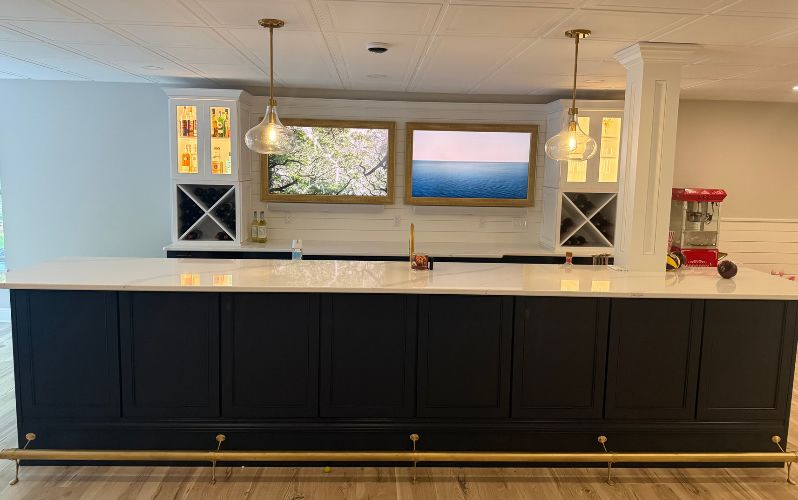
A welcoming kitchen should support food preparation while still giving guests space to gather.
An island or peninsula can provide room to prepare food and then transition into a buffet or serving surface. A separate beverage area can also keep guests away from the primary cooking zone.
Countertops should balance performance with visual impact. Wendy recognizes granite as a durable option, particularly when heat resistance is a priority, but often prefers the quieter appearance of quartz.
“I prefer quartz. I think granite can be a little too busy.”
Because countertops occupy a large area, their pattern should support the cabinetry, flooring, and backsplash rather than compete with them.
Choose Flooring for Warmth and Real Life
Flooring contributes to the atmosphere of a room, but it must also accommodate everyday activity.
Wendy identifies laminate and luxury vinyl plank as practical options for homes with children, pets, or frequent guests. A lighter wood look can make a room feel brighter and more open, while a richer brown can introduce warmth. Flooring with natural variation may also help conceal everyday marks in an active household.
Your floor color should respond to the materials that are already part of the home. In one project, Wendy recounts needing to coordinate new flooring with an older, gold-toned wood floor in a 1960s home. She selected Mohawk RevWood with tones that complemented the original floor without trying to duplicate it.
The result allowed the old and new spaces to feel connected while respecting the home’s existing character. It also reinforced an important principle: the best flooring is not necessarily the newest or most popular color. It is the material that works with the home, supports the desired atmosphere, and fits the way the household lives.
Add Warmth and Definition with Area Rugs
Area rugs can introduce softness, pattern, and color while defining seating areas within an open floor plan.
“Having an area rug does warm that space up when you do have hard surfaces like LVP.”
For a condo overlooking Lake Erie, Wendy recalls choosing a blue-and-tan carpet with a water-inspired pattern for the living room, she then carried the palette into a coordinating stair runner.
The selections connected the interior to the waterfront setting and brought continuity to two distinct areas of the home. Because a custom rug requires time, homeowners working toward a holiday or gathering deadline should make the selection early.
Create Cohesion Without Making Everything Match
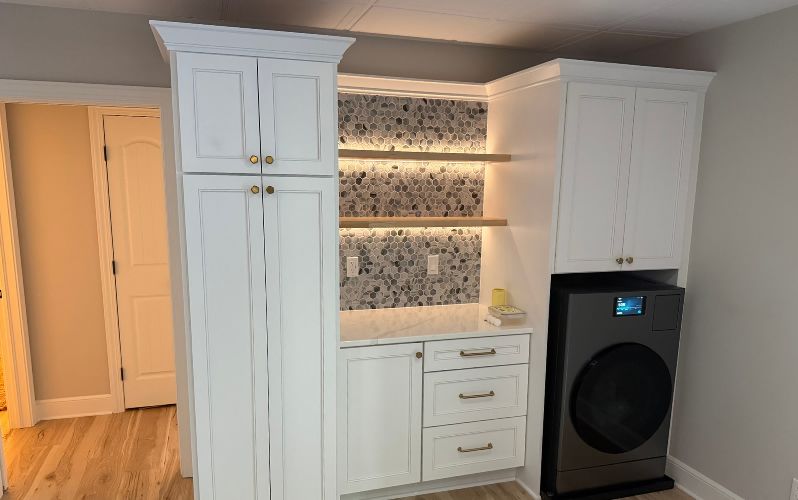
Open floor plans can make material selection more challenging because the kitchen, dining area, and living room are often visible at the same time.
Wendy recommends creating consistency through the primary flooring and wall color. Each area can then develop its own character through other materials. A color or finish used prominently in one area can appear in a smaller way elsewhere. This creates visual flow without making the entire home feel repetitive.
Smaller changes such as hardware updates can help reinforce the palette as well. Cabinet hardware offers a relatively simple way to update a kitchen or bathroom. Brass, bronze, and gold-toned finishes can bring warmth to a cool or neutral room.
Build the Full Palette in One Place
As Wendy’s business expanded from color consultations to full kitchens, bathrooms, and flooring projects, having access to several product categories through ProSource became increasingly valuable.
“The benefit to ProSource is no matter what that project is, you can get everything there. It’s not like I have to shop there and then go somewhere else for flooring and go somewhere else for lighting.”
Seeing flooring, carpet, tile, cabinetry, countertops, and hardware together makes it easier to build a connected palette rather than selecting each material in isolation. It also gives clients a better understanding of a product’s actual color, texture, scale, and thickness.
When a client cannot visit the showroom, Wendy has relied on the free samples to bring that showroom experience directly to the client. This allows them to evaluate materials under the home’s actual lighting and alongside the materials that will remain in the space.
Product Support That Helps Complete the Vision
Bringing the main colors and materials together is an important part of the selection process, but completing the design also requires attention to smaller installation details.
Wendy values that her ProSource account manager helps account for those details while the larger selections are being made.
“You’re picking out the tile. Don’t forget the Schluter trim, and don’t forget, let’s pick the grout color.”
Choosing these supporting details alongside the tile helps ensure that the finishes support the broader palette. It can also prevent a return appointment for an important component that was overlooked.
That support becomes even more valuable when an unexpected product issue arises. During one primary bathroom renovation, the supplier discovered that the last slab of the client’s selected quartz was cracked just one day before countertop templating.
Wendy’s ProSource account manager quickly found a similar option. Wendy reviewed it at the showroom, and her account manager brought it to the client for approval that same afternoon. The quick response helped keep the countertop selection moving.
Final Takeaway: Build Warmth in Layers
A warmer home does not depend on one product or project. It comes from the way color, lighting, texture, durable surfaces, practical layouts, and personal details work together.
Paint can establish the direction. Flooring grounds the palette. Area rugs introduce softness and pattern. Cabinets and countertops support the way the kitchen functions. Hardware, window treatments, and lighting provide the finishing layers.
For a quick winter refresh, homeowners can focus on paint, lighting, hardware, rugs, and rearranging pieces they already own. Flooring, cabinetry, countertops, custom rugs, and window treatments require more time for product selection, ordering, and installation.
Whether the homeowner completes a simple update or begins a larger renovation, the goal is to create a space that feels welcoming for winter gatherings and continues to provide comfort, function, and personality throughout the year.
Get Started Today
Tagged:
Dining
Entertainment
Kitchen
Living Room
Home Remodeling and Commercial Renovation Made Easy
Whether you are updating a little, doing a full-scale remodel, you’ve come to the right place. Browse stunning spaces created with the help of ProSource Wholesale. Gain knowledge from articles with project tips and trends ideas. Browse over 50,000 products at low, wholesale prices. Then connect with your local showroom to get started.
Helping You Complete Successful Projects
With a team of product and project experts who provide personalized service tailored to your needs, ProSource is the source for project success. We're more than a home improvement store. Since 1991, we’ve been a trusted partner for trade professionals and their clients.
ProSource Helps Complete Successful Projects. Make Yours Next.
Find A Local Showroom